

Chapter 5
In linguistics, the perfect places the time of the eventuality prior to the time the speaker is talking about, yielding existential, universal, result, and present stative readings. The review argues this standard temporal theory accounts for all six perfects Campbell cites, such as John 1:26, and that Campbell’s imperfective analysis of the perfect conflicts with Greek morphology.
The last form Campbell treats in part 1 of the book is the perfect. He presents different scholars who have worked on the perfect in New Testament studies, but he does not present any linguists who have worked on it in classical or New Testament Greek. For a treatment of the perfect from a semanticist, I would refer you to the work of Gero and von Stechow who give a diachronic analysis of the perfect and who also treat the New Testament period (and the New Testament itself).
This chapter has the most data in terms of examples, and it also engages far more with other theories of the perfect. I do not want to just evaluate Campbell’s evaluation of other scholars. Instead, I again want to present the standard temporal theory in linguistics and contrast that with Campbell’s. Honestly, critiques could be made for the other theories presented in the chapter as well when compared to the theory in modern semantics. That will have to wait for a different occasion, however.
Before getting into the theory, I want to show how Campbell reasons through his critique of other theories, and I want to affirm how he does it. He begins with the so-called “traditional” view: “Traditionally the perfect indicative tense-form was understood as indicating a past action with ongoing consequences…The great problem with this analysis is that it doesn’t work. It yields far too many exceptions…” Campbell goes on to list some exceptions such as John 1:26 which says, μέσος ὑμῶν ἕστηκεν ὃν ὑμεῖς οὐκ οἴδατε ‘Someone in the midst of you stands whom you do not know.’ The verbs ἕστηκεν ‘stand’ and οἴδατε ‘know’ are both present statives. Campbell rightly points out that this is a case where the data does not seem to fit the description of a past action with ongoing consequences. On the surface, it is difficult to see how there is a past action here. Because there is a mismatch between the data and our description, we need to adjust our description of the form to match the data. This is what we are trying to do when we do semantics, and Campbell is doing it correctly here. This is exactly what we have done in the previous chapter with Campbell’s description of the forms. He says that the perfective is not detailed and that the imperfective is detailed. We then need to check that against the data. As I have said, it is difficult to check “level of detail” because that is itself a subjective notion, but the point is that when we are evaluating different theories, this is what we are trying to do. See what the theory predicts in terms of the range of interpretations of a form and then test that prediction against the data.
In order to introduce the temporal theory, we need to clarify the temporal nature of aspect. We have said that all linguists regard it as temporal, but this does not explain what it refers to. Aspect is the relationship between the time of the eventuality and the time that the speaker is referring to. Because aspect is fundamentally a relationship between two time intervals, we can conceive of different kinds of relationships between the two intervals.
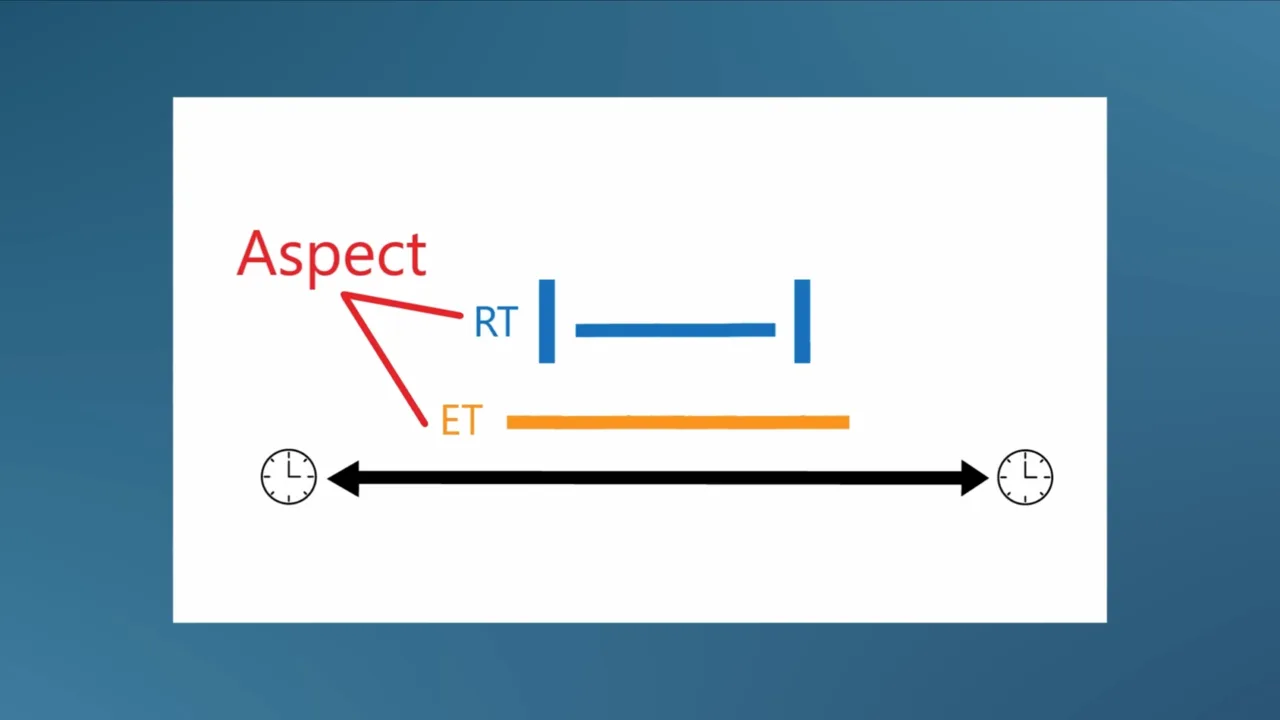
For example, one interval can be included within the other, or that same interval could extend beyond the other. This is the basic distinction between perfective and imperfective aspect. Perfective aspect includes the entire time of the eventuality within whatever time the speaker is referring to. This is why the end of the event is referenced in a sentence like ‘Amos walked to the store’. The speaker includes Amos reaching the store in the event description. Imperfective aspect, on the other hand, has the time of the eventuality extending beyond whatever time the speaker is referring to. This is why the end of the event is typically not reached in imperfective events, such as in ‘Amos was walking to the store’ where the speaker does not include Amos actually reaching the store in the event description.
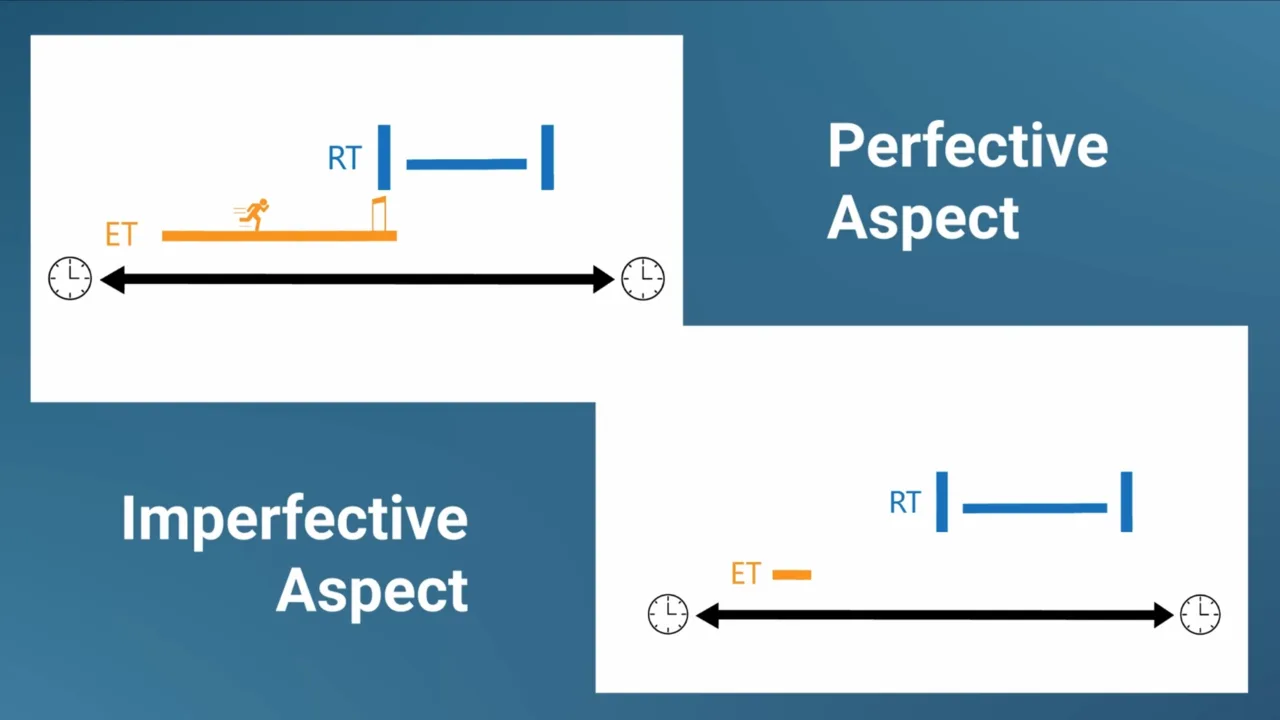
Both of these need to be nuanced to account for the data (especially the imperfective, which we have said only allows for the in progress interpretation rather than requiring it like the progressive form), but you get the general idea. The basic idea of the perfect is likewise very simple: the time of the eventuality occurs prior to the time the speaker is talking about. This is where the traditional notion of “past action with present consequences” comes from, but as Campbell rightly points out, this description alone does not account for the data.
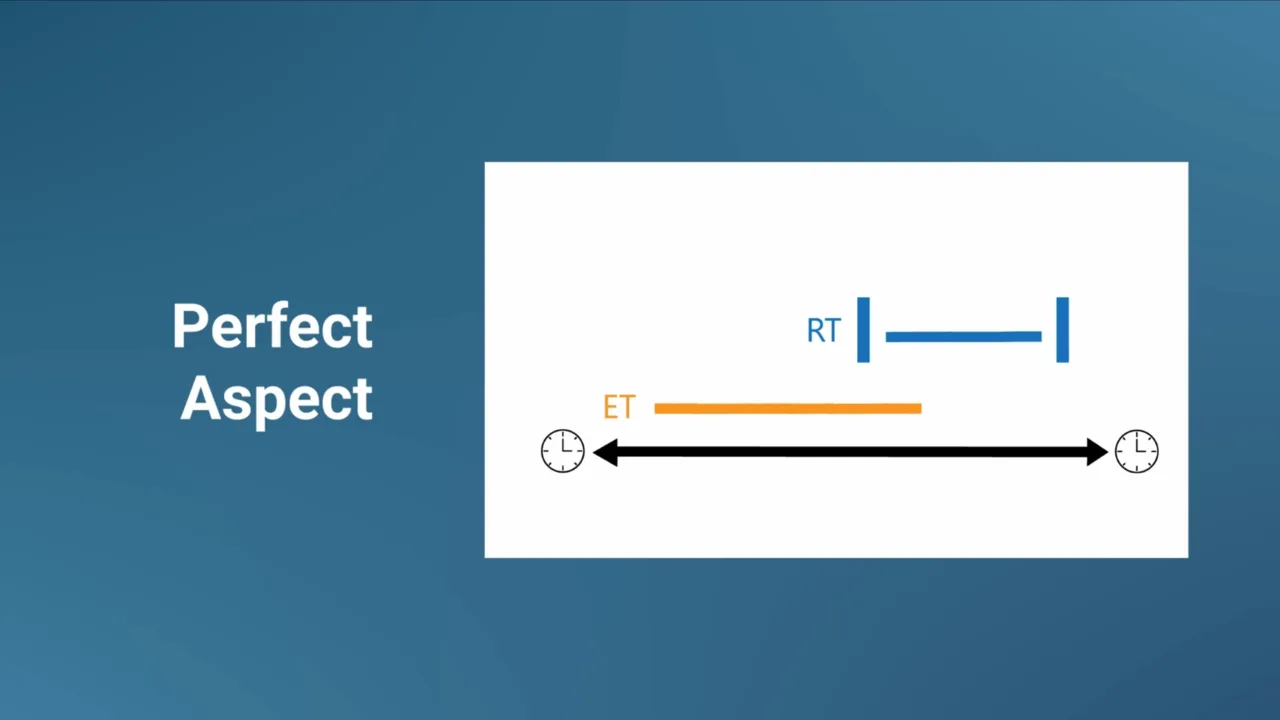
How do linguists deal with the multiplicity of readings of the perfect? First, it should be noted that not all perfect forms across languages are identical. The English perfect famously disallows past time adverbials. The sentence “Amos has walked to the store yesterday” is ungrammatical. The German Perfekt, however, does allow for past time adverbials, so the equivalent sentence is grammatical. With the Greek perfect, we would need to account for the standard readings of the perfect and then nuance that definition based on the data.
In linguistics, there are four major readings of the perfect, which are the existential perfect, the universal perfect, the result perfect, and the present stative (the so-called “hot news” reading is a fifth reading that is typically subsumed under other readings). The existential perfect says that an event or state occurred prior to the time the speaker is talking about. Events without natural endpoints typically get this reading, such as ‘I have played basketball’. There is no natural endpoint to playing basketball, so we interpret this sentence to mean that there exists a time before the present in which I played basketball.
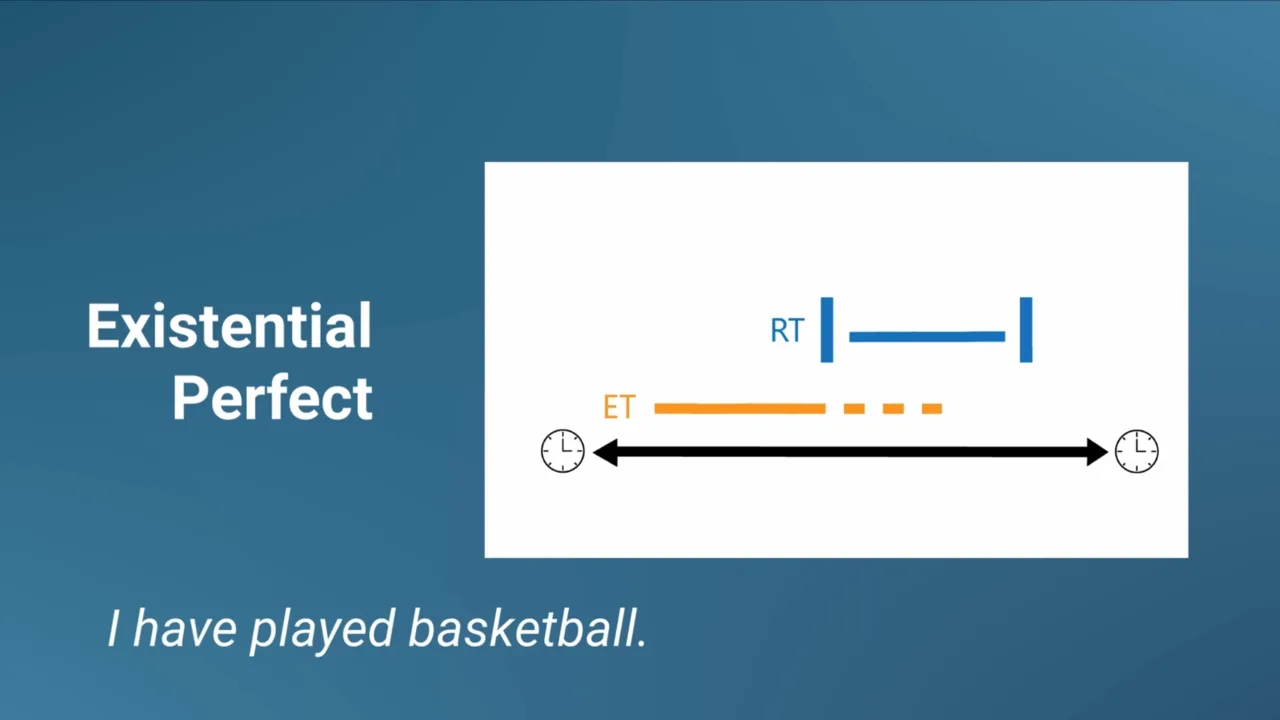
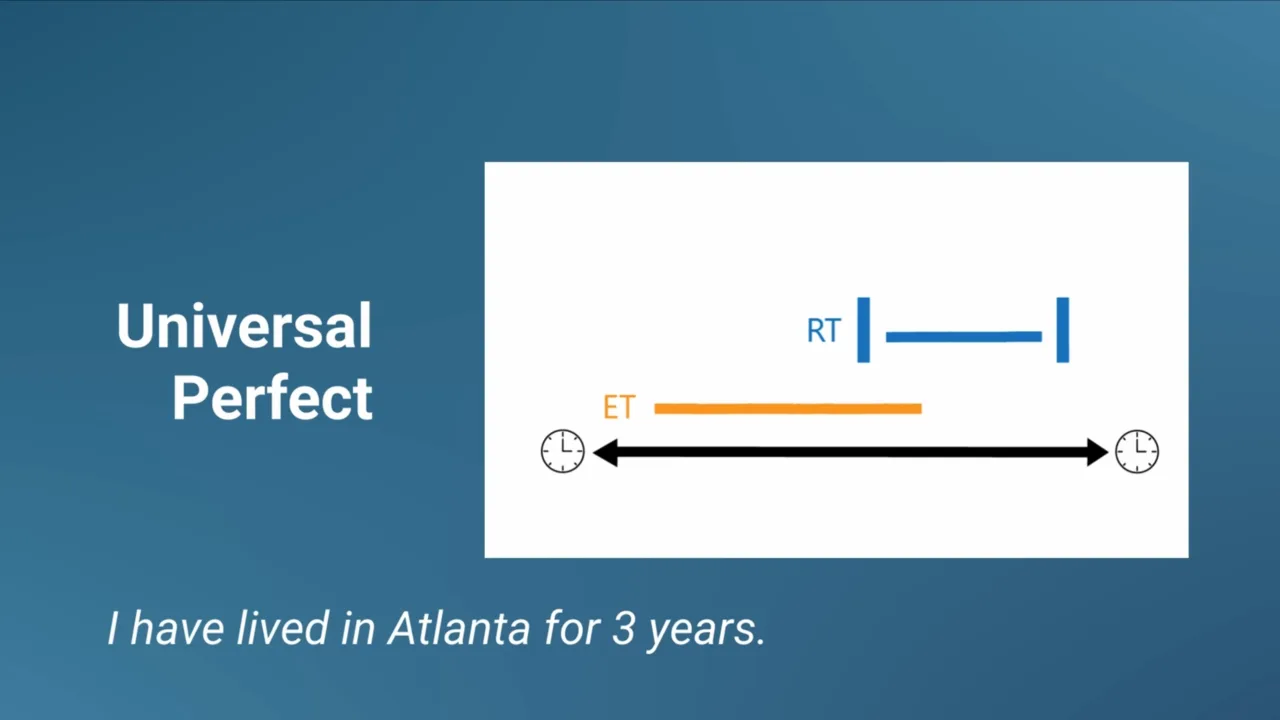
States can be interpreted existentially as well, but the universal perfect reading is also available, such as ‘I have lived in Atlanta for 3 years.’ In this sentence, we interpret the state as starting three years ago and running into the present time.
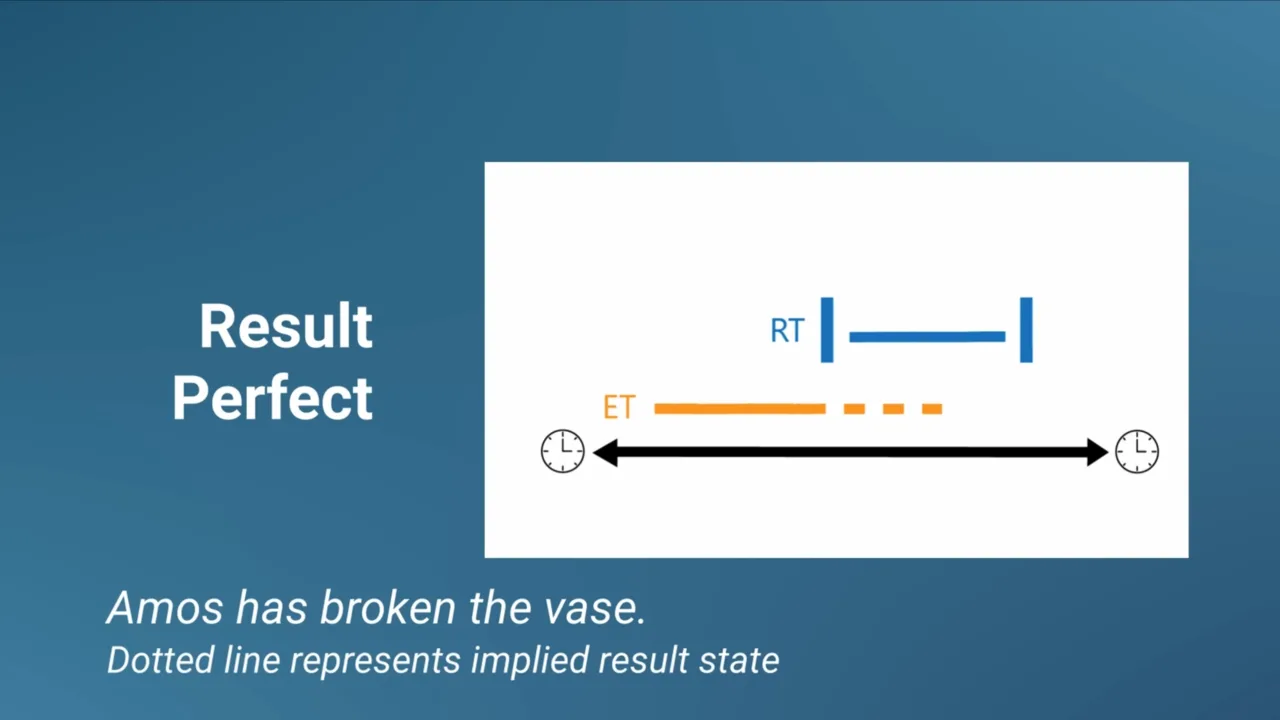
Events with result states get the result perfect interpretation, such as “Amos has broken the vase.” In this case, the vase is in the state of being broken, so there is a result that obtains from the event. This is the reading that most closely fits the traditional analysis of the perfect.
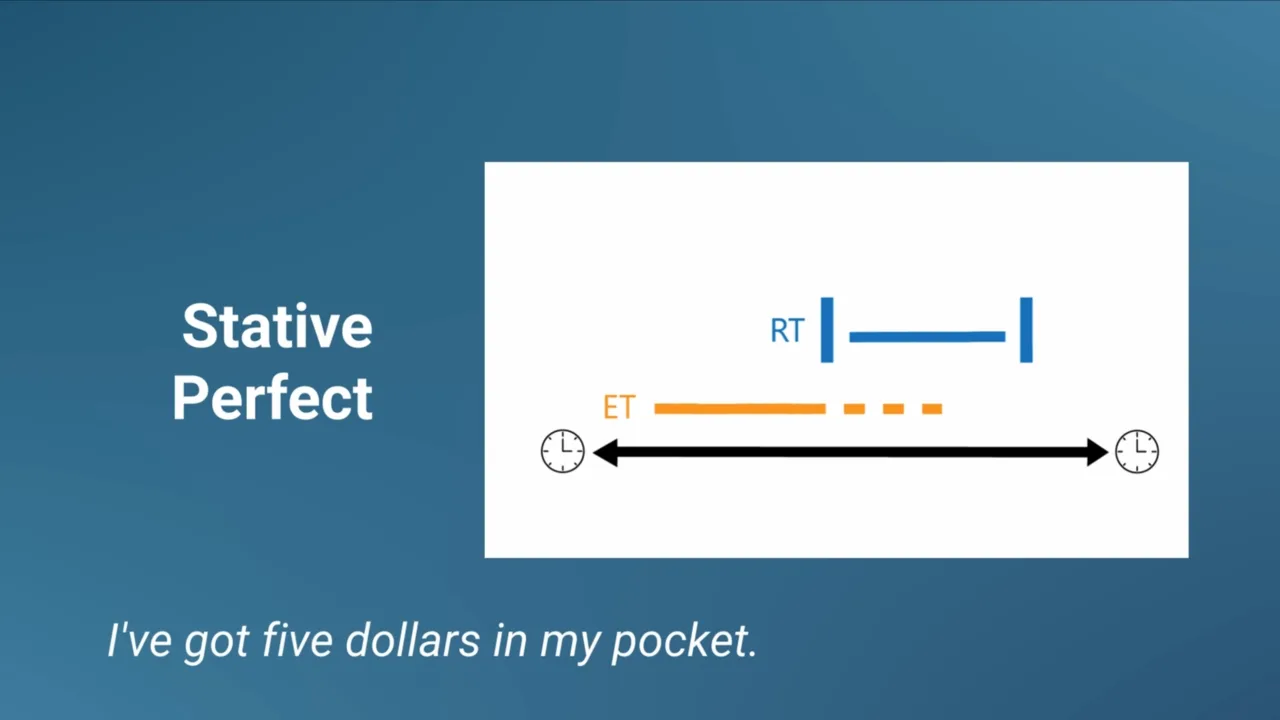
Finally, there is the present state reading. Although this reading is more common in other perfects in other languages, we do get it in English in a sentence like “I’ve got five dollars in my pocket.” The state of having five dollars simply holds in the present.
Returning to Campbell, he gives 6 examples of the perfect in this chapter. John 1:26 we have already mentioned, and it would fall under the present stative interpretation. It is unique in that the state is the only thing referred to, and the prior event is not obvious. However, this reading only obtains in a limited set of verbs, the most common being οἶδα ‘know’. This verb is actually from the root ειδ ‘see’. One can see how this kind of root developed the present stative interpretation. After you have seen something, you know it. As linguist Paul Kiparsky discusses, verbs that fall into this category are consistent across languages, and they usually refer to a state in which a past action can be inferred. Campbell also cites Luke 20:21 which also falls into this category.
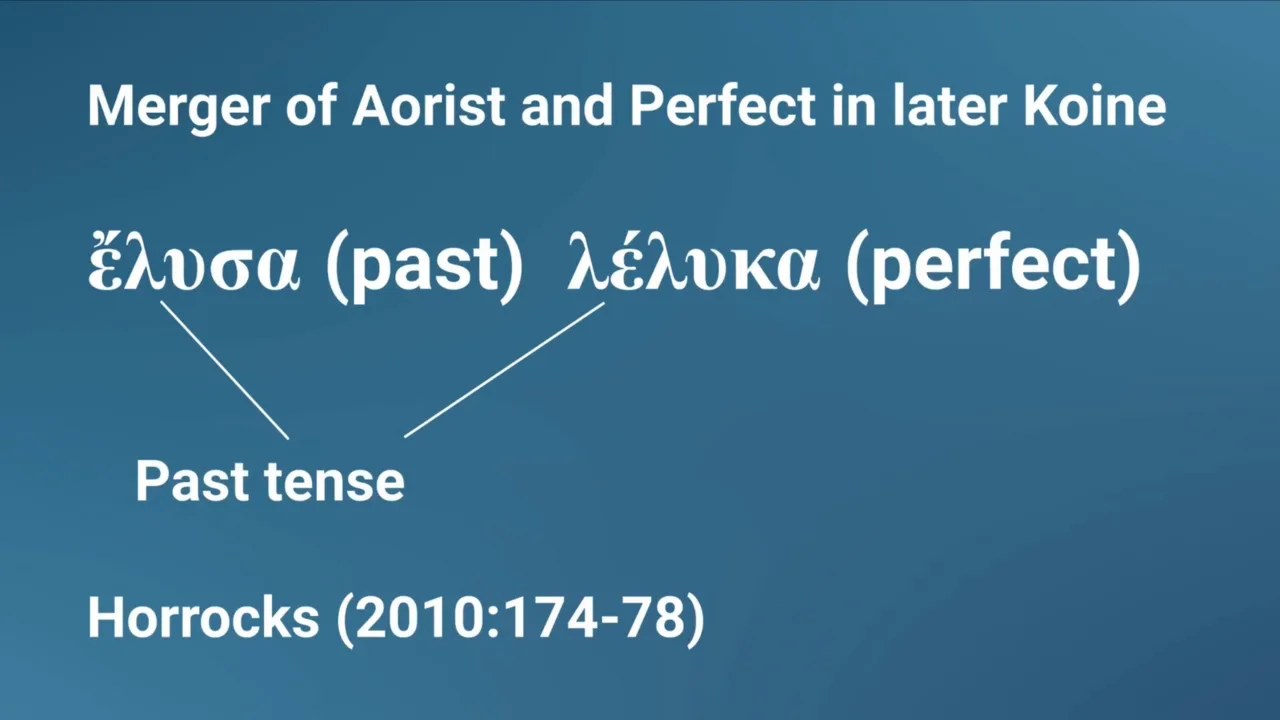
Revelation 8:5 is an example of what looks more like a perfective interpretation than what we have described as a perfect. It says καὶ εἴληφεν ὁ ἄγγελος τὸν λιβανωτὸν καὶ ἐγέμισεν αὐτὸν ‘And the angel took the censer and filled it.’ The perfect εἴληφεν is immediately followed by the aorist ἐγέμισεν, and the two seem to be interpreted identically. In later Greek, the perfect will become the standard form for this kind of use, so it seems that we see the beginnings of that trend happening here. The Greek perfect is actually very similar to the Biblical Hebrew Qatal form in this respect. The details of how to account for this use get a little complicated, so instead of boring you with the analy sis, you can just check out my article on the Biblical Hebrew Qatal form. I’d also recommend Ashwini Deo and Cleo Condoravdi’s treatment of the Sanskrit -ta form which also has a similar range of meaning.
John 7:22 is another example, which says διὰ τοῦτο Μωϋσῆς δέδωκεν ὑμῖν τὴν περιτομήν ‘On account of this, Moses has given you circumcision.’ This is probably a result perfect, though it could also be existential. The idea is that the people now possess the practice of circumcision since Moses gave it to them. Thus, they are in a new state, namely of possessing circumcision, on account of the verb. Under the existential perfect reading, it would mean that a past action occurred prior to the time being talked about, namely the present. The next example is John 12:23, which says ἐλήλυθεν ἡ ὥρα ‘the hour has come.’ In this example, the verb ἐλήλυθεν ‘has come’ refers to an event with a consequent state, namely a change of location or time. Thus, this is a result state perfect. The hour has come and is now here in Jesus’s present moment.
Finally, Campbell cites John 5:33 which says ὑμεῖς ἀπεστάλκατε πρὸς Ἰωάννην, καὶ μεμαρτύρηκεν τῇ ἀληθείᾳ· ‘You have sent to John and he has borne witness to the truth.’ Both of these are best taken as existential perfects. Prior to the present time we are discussing, Jesus’s addressees sent people to John and John has already told them the truth. The perfect is used because the present time is what is relevant in the discourse. John already told them the truth. Now in this present time, they should know better.
These are the examples Campbell cites against the other theories, the examples that the other theories supposedly cannot account for. I am not going to say anything against the other theories, but the standard temporal theory of the perfect in linguistics accounts for all of them. Campbell calls the perfect an imperfective essentially because many of the uses parallel the present form. He says, “An overlooked fact in this debate is that the perfect indicative parallels the present indicative in its usage far more than it seems to do with the aorist.” Campbell concludes from this that they share the same aspect, which, as we have said, he has described as something like a more “detailed” viewpoint. The same issues with his description of the present form as imperfective would then apply to the perfect. It is very difficult to know what he means by “detailed”. Moreover, Campbell is then left with three imperfective forms, none of which are distinguished based on tense. Because of this, he suggests that the perfect has “heightened proximity” in comparison to the present. So whereas the imperfect is remote and imperfective and the present is proximate and imperfective, the perfect is very proximate and imperfective. We will come to the idea that verbal forms can express spatial notions shortly.
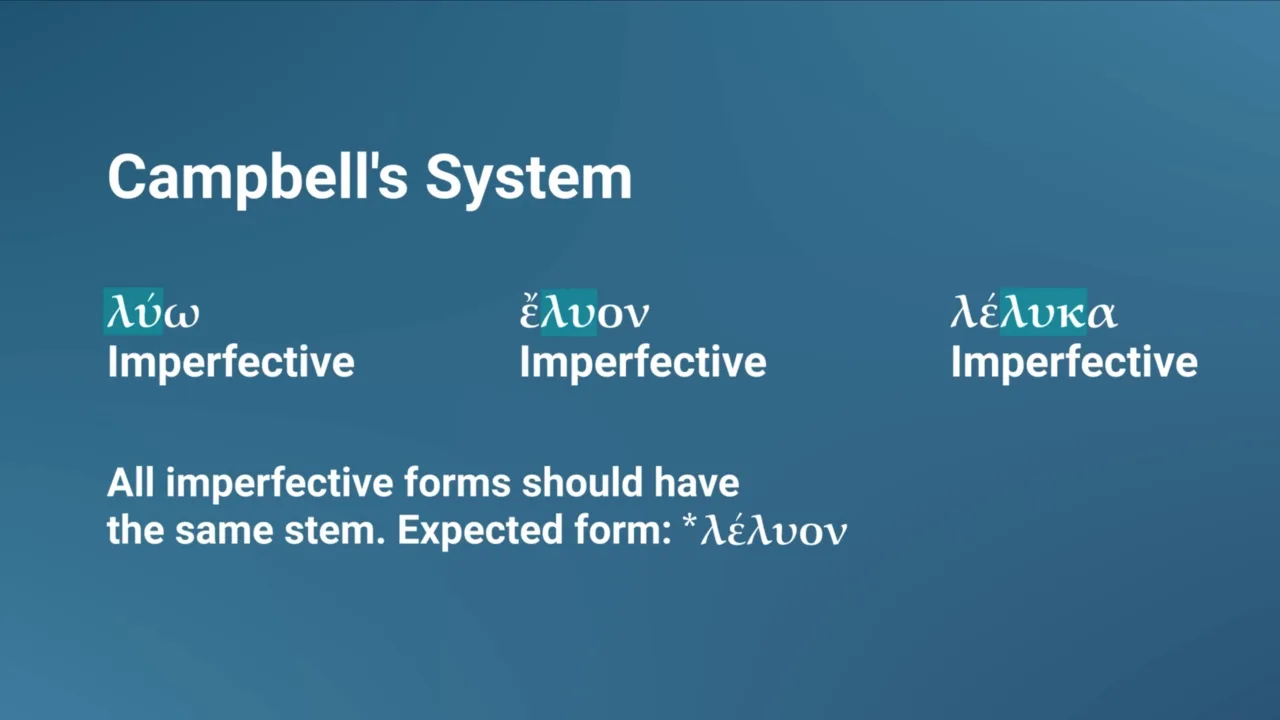
Campbell has not been followed by many in his analysis of the perfect form, so again, I do not want to belabor the point. However, it is worth pointing out that making the perfect form identical to the present form in aspect would be against what we see in the morphology. What do I mean by this? Both the present and imperfect forms have the same stem, and this indicates their aspect. The verb λύω is λύω and ἔλυον with the main differences being the initial ε (traditionally marking the past tense, which I would also agree with) and the shortened person and number endings. The perfect form is λέλυκα. If the initial reduplication is giving us Campbell’s notion of “heightened proximity,” then the final κα would give us the aspect. Since the aspect is the same as the imperfective forms, we would expect the same stem, so we would expect something like the form λέλυον.
Many other arguments could be given against an imperfective analysis of the perfect, but I touch on the morphology here because this is part of what plays a role in linguistic analysis. We are not just trying to come up with a meaning for each individual verb form, but we are also trying to come up with a coherent system that reflects both the usage and actual morphological shape of each separate verb form.
Excursus on space and time
Campbell claims Greek indicative verbs encode the spatial values of remoteness and proximity instead of tense. The review counters that Campbell admits the forms are never used spatially, and that his uncited claim that verbal systems develop from spatial to temporal is wrong: Bybee’s “The Evolution of Grammar” shows spatial meaning is lost when a form becomes grammatical.
Campbell suggests that spatial categories can better explain the data than temporal categories. Basically, there are apparent counterexamples to the temporal analysis, so instead of refining the temporal categories, he abandons them for spatial categories. He says, “It is claimed in this book that indicative Greek verbs semantically encode aspect along with the spatial value of remoteness or proximity…The difference between this description of the semantics of verbs and that of traditional analyses is that semantic temporal reference (“tense”) has been replaced by semantic spatial categories…It is also claimed that these spatial values of remoteness and proximity, which are semantic, normally express temporal reference on the pragmatic level.” There are some foundational claims here. For Campbell, there is no time inherent in any of the verb forms. Against the field of linguistics, he defines aspect spatially rather than temporally. That we have already covered. But Campbell takes his innovations a step further. He invents a new spatial category of remoteness and proximity and replaces the tenses with them. Crucially, he claims that his categories will normally have a temporal interpretation. This means that giving temporal examples of the verb forms will not, according to him, disprove his theory.
There are two things I want to cover in this section, which I think are most germane to the discussion. First, is his use of the term spatial. He uses the term spatial, but he explicitly denies that the verb forms are used spatially. He says, “if I were to describe an action that occurred on my street, I am not forced to employ a proximate tense-form simply because it happened close to me physically.” So if the verb forms semantically encode spatial categories, then the spatial categories they encode are always present in every use of the form. But, according to Campbell, the actual spatial interpretation of being close or far from something is never an interpretation of the verb form. At that point, why are we calling it spatial? Campbell says that space is being used as a metaphor, but the only metaphor he mentions explicitly is the temporal metaphor. This is precisely why linguists, such as Carlotta Smith, have used the term viewpoint aspect. They have used a spatial metaphor for a temporal concept in an attempt to explain something temporal. For example, in Paul Kroeger’s introductory semantics textbook, “Analyzing Meaning”, he quotes Carlotta Smith and explains the spatial metaphor. He says, “Smith (1997: 2–3) states: “Aspectual viewpoints present situations with a particular perspective or focus, rather like the focus of a camera lens. Viewpoint gives a full or partial view of the situation talked about.” Using Smith’s metaphor of the camera lens, we could describe perfective aspect as a wide angle view: the situation fits inside the time frame of the speaker’s perspective. The imperfective is like a zoom or close-up view, focusing on just a part of the situation being described, with the situation as a whole extending beyond the boundaries of the speaker’s perspective.” The trouble is that Campbell has said that space is a metaphor, but he explicitly denies it is a metaphor for temporality, as all other linguists claim it is. Though he says the metaphor extends to temporality, it is not clear what else besides the level of descriptiveness (which we have critiqued earlier) the metaphor would refer to in his view. Moreover, one would think that if the verb forms encode spatial concepts, they would at least occasionally refer to things in space, but they do not, as Campbell admits.
Second, Campbell makes a diachronic claim that verbal systems tend to change from spatial to temporal categories. He says, “All languages change over time, and one of the major changes that can be observed in the history of a number of languages is that the verbal system tends to begin as a spatial system and later develops into a temporal one.” This is a strong claim, and no citations are given. There are several places in the book where Campbell makes broad claims about what happens in the “languages of the world” or “linguistic theory” without any citations. It is not enough at this point to say that this is an introductory book for students, so not everything needs to be proven. Other scholars within New Testament studies are cited plenty of times. If this was written in a scholarly work, I personally would shrug it off and let the scholars decide for themselves whether it was right or wrong. But it is written in an introductory book for students, and they will almost certainly trust Campbell’s knowledge of other languages and the wider linguistics world when such statements are made. However, Campbell’s claim is wrong.
The Evolution of Grammar by Joan Bybee, et al
Besides the WALS database which we have already said has a definition of aspect that is temporal (and never once mentions spatial concepts as an option for what verbal morphemes can encode), the most comprehensive published work on the diachronic study of verbal forms across dozens of languages is “The Evolution of Grammar” by Joan Bybee and comp any. They also define aspect temporally. They recognize that linguists use the spatial metaphor (even Comrie) but that this is only a metaphor. As is commonly recognized, they note that a spatial verb like ‘go’ can sometimes have its spatial meaning bleached and come to mean something temporal. This is true of English’s “going to” construction in something like “Amos is going to walk to the store.” However, when this happens, the spatial meaning gets lost from the verb. They state, “Thus the temporal notion is implied by the spatial one and the temporal meaning is intrinsic to the construction all along…Thus the real mechanism of change to be explained is how the spatial meaning gets lost.” The point here is that when the spatial verb becomes a grammatical morpheme, it loses its spatial meaning. It is no longer spatial, but only temporal. They are explicitly discussing lexical items here, such as verbs like ‘go’ that sometimes become grammatical markers. Nowhere is there a claim that grammatical forms, such as a morpheme that attaches to a verb, move from spatial to temporal. Once it is already part of the verb form, it is necessarily temporal. Hence, the -σα form that marks the aorist, and the -κα form that marks the perfect, and the various other verbal forms that mark different tenses and aspects in Greek are already temporal. If they had a spatial meaning at one point (and they certainly need not have had a spatial meaning), then it is now gone. This is true of every verb form in every language. Spatial categories are not encoded in verb forms.
Conclusion (Chapters 2-5)
Campbell’s book is presented as bringing linguistics to New Testament studies, yet it rejects the standard temporal definition of aspect held by the two linguists cited in part 1, Bernard Comrie and Mari Broman Olsen. No language in the WALS database encodes spatial categories in its verbal system, and Kevin Grasso urges respectful debate on an issue that affects interpreting God’s Word.
Let’s wrap up. One of the biggest problems I have with Campbell’s book is that it is presented as if Campbell is bringing the linguistics world to New Testament studies. In part 1, two linguists were cited, Bernard Comrie and Mari Broman Olsen, and Campbell disagrees with their definition of aspect. I have shown that their definitions are standard. Indeed, there are no significant counterexamples. If Campbell or anyone else is able to produce linguists who clearly believe that aspect is spatial, I will be happy to take back the point that no one in linguistics believes aspect to be spatial. We would then need to discuss which camp is correct. With regard to Greek, I would say the same: if a language is produced that encodes spatial categories in its verbal system, I would be happy to discuss whether Koine Greek might also be such a language. There is no such language in the WALS database, which categorizes hundreds of languages.
This has been an extensive review, more extensive than I had originally planned. I will stress yet again that this is for students and scholars who are confused about the Greek verbal system. I am not doing this to win friends. Even after my first review, my character has been belittled in various ways. No one enjoys that, and neither do I. Others have responded positively, and I appreciate that. I will again encourage all who comment to be respectful to both sides. And again, my goal is to help students to see the problems with Campbell’s analysis as well as a way forward. We have to better incorporate the insights of linguistics and what they say about how meaning is constructed in language. Ultimately, it affects our interpretation of God’s Word. As Campbell and I both agree, it is worth doing whatever we can to get that right.